
You are stopped at a red light when a purple and orange FedEx Ground truck crashes into the back of your car. The driver gets out in the usual uniform, but when you trade insurance information, you notice something strange: the policy isn’t from FedEx. You haven’t heard of “FastTrack Logistics LLC,” which is where it came from. When you call FedEx to make a claim, they say that the driver wasn’t their employee and that they aren’t responsible—leaving many victims unsure of their next step and searching for a reliable FedEx accident lawyer who understands how these cases really work.
This happens every day in California. Because of how FedEx sets up its delivery operations, accidents involving FedEx trucks are legally complicated. Many victims are shocked to find out that the driver “doesn’t work for FedEx,” but that doesn’t mean the company isn’t responsible. The label of “independent contractor” is not a bulletproof shield, and California law gives people several ways to hold FedEx responsible when their business model puts dangerous drivers on the road under their name.
To really understand who is responsible, you have to look beyond the paperwork and see how much control FedEx has over its delivery network in the real world.
How FedEx’s Independent Service Provider (ISP) Model Works
What Is an ISP, or Independent Service Provider?
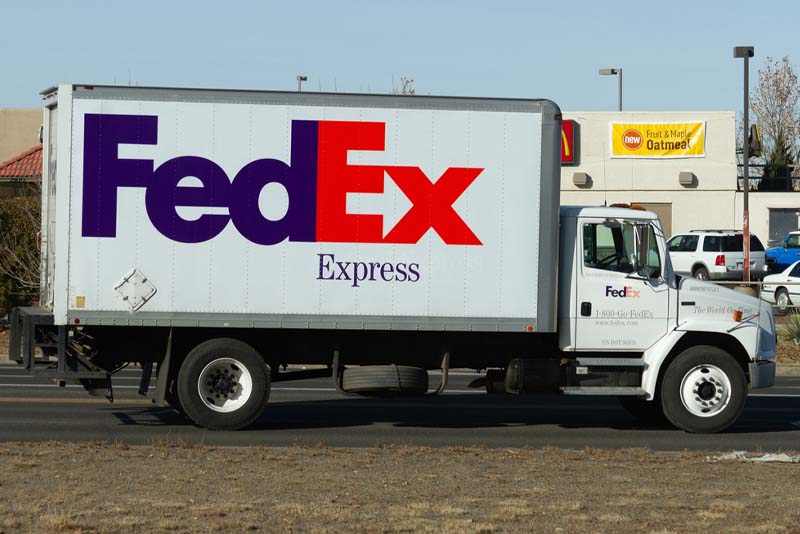
There are two main parts to FedEx: FedEx Express, which uses company-owned trucks and employees to drive them, and FedEx Ground, which works with independent service providers. Most ISPs are small LLCs that own or lease their own delivery vans and hire their own drivers.
If you look closely at the side of a FedEx Ground truck, you’ll see “FedEx Ground” in big letters. Near the bottom, in smaller letters, it often says “Operated by [Name of LLC].”
This means that the truck with the FedEx logo on it and the driver in the FedEx uniform may actually work for a third-party contractor with few assets and little insurance.
What the ISP Model Is and Why FedEx Uses It
The contractor model is useful for FedEx in many ways. It lowers payroll taxes, gets rid of employee benefits, and most importantly, it makes it illegal for the company to be responsible for accidents.
FedEx tries to move the risk of accidents off of its balance sheet and onto small businesses that don’t have as many resources by calling drivers contractors instead of employees. When accidents happen, FedEx’s first line of defense is always the same:
“We didn’t do it; the independent company did.”
Who Is Automatically Responsible After an Accident with a FedEx Contractor?
The FedEx Driver
The person driving is personally responsible for careless driving. This includes speeding, not paying attention while driving, not yielding, or breaking the rules set by the Federal Motor Carrier Safety Administration (FMCSA) and the California Vehicle Code. The driver can be held responsible if their unsafe actions led to the crash.
The Contractor Company (ISP / LLC)
According to California’s doctrine of respondeat superior, the contractor company that hires the driver is responsible for any accidents that happen while the driver is working.
The LLC is directly responsible for any failures by the ISP to properly hire, train, or supervise its drivers, or to keep up with vehicle maintenance.
Problems with Insurance Coverage
When a FedEx contractor gets into an accident, there are usually more than one insurance policy involved. These include the driver’s personal policy, the contractor’s commercial policy, and maybe even FedEx’s umbrella policies.
Most FedEx Ground ISPs need to have commercial general liability insurance with limits of about $1 million. These limits are often not enough to fully compensate victims for catastrophic injuries like traumatic brain injuries, spinal cord damage, or wrongful death.
Can FedEx Still Be Held Responsible if the Driver Is a Contractor?
The Myth: “FedEx Isn’t Responsible”
FedEx’s lawyers often say that being an independent contractor protects the company from being sued. They point to contracts that say the ISP works on its own. But California courts look at more than just labels; they look at what the relationship is really like.
The term “independent contractor” is just the start of the legal analysis.
Legal Theories That Could Make FedEx Liable
Management of Operations
The control test is the strongest case for FedEx’s liability. If FedEx has such tight control over daily operations that the ISP isn’t really independent, courts may not recognize the contractor label.
This control can be seen in:
- Tracking technology: FedEx keeps an eye on drivers every second with handheld scanners that keep track of their location, delivery times, and how well they follow their routes.
- Drivers must wear certain FedEx-branded clothes.
- Trucks must be painted in FedEx colors and kept clean according to FedEx’s washing schedules.
- FedEx often gives drivers very little freedom over how and when to do their work.
When the so-called “independent business owner” does what FedEx tells them to do, just like any other employee would, the legal difference disappears.
Apparent Agency
California acknowledges the principle of apparent agency (also referred to as ostensible agency). If people reasonably think the driver works for FedEx because of the truck’s branding, the uniform, and FedEx’s national reputation, the company can’t deny the relationship.
The law protects people who thought they were dealing with a FedEx business when the company acted that way.
Hiring or Supervising Without Care
FedEx has to check out the contractors it lets work under its name. If FedEx knew that an ISP had a history of accidents or safety violations through its own monitoring systems but still renewed the contract, the company is responsible for its own carelessness in keeping an unsafe contractor on California roads.
Why These Cases Need Strong Investigations
To prove that FedEx is responsible, you need to look at contracts, internal manuals, operational rules, dispatch systems, and performance monitoring data.
We send spoliation letters right away at Big Ben Lawyers to protect important evidence, such as Electronic Control Module (ECM) data from the truck’s “black box” and video from in-cab cameras like Lytx or DriveCam. If this evidence isn’t protected by law, it will disappear quickly.
Holding FedEx Responsible by Piercing the Corporate Veil
What “Piercing the Corporate Veil” Means
In simple terms, “piercing the corporate veil” means that courts can look past the LLC structure when it is mostly there to protect a bigger company from being sued instead of running as a separate business.
This legal principle stops businesses from using shell companies to protect themselves from lawsuits when the separation isn’t real.
Things Courts Look At
When California courts decide whether to pierce the veil, they look at a number of things:
- How much control FedEx has over the contractor’s daily work
- How much the ISP depends on FedEx for money (often their only client)
- If the contractor doesn’t really have business freedom
- If the LLC structure is mostly there to protect FedEx from liability
Why This Is Important for People Who Have Been Hurt
Getting through the corporate veil lets you access FedEx’s huge insurance pools, which can include umbrella policies worth $5 million, $50 million, or more.
This is very important for victims who need long-term medical care, are permanently disabled, or families who are suing for wrongful death and the contractor’s $1 million policy is not enough.
Injuries That Happen Often in FedEx Truck Accidents
Because of their size, weight, and design, delivery trucks are especially dangerous. FedEx Ground step vans are big, heavy trucks that have big blind spots. They often back into neighborhoods where people and kids are walking.
Some common injuries are:
- Traumatic brain injuries (TBI)
- Spinal cord injuries
- Crush injuries
- Broken bones and orthopedic injuries
- Internal organ damage
- Fatal collisions
Even at low speeds, collisions with loaded delivery trucks are deadly because of their weight and speed.
What to Do After an Accident with a FedEx Contractor Truck in California
Next Steps
Even if the injuries don’t seem that bad, get medical help right away. Some serious conditions don’t show symptoms right away.
Take pictures of:
- The truck (especially the door text that says “Operated by [Company Name]”)
- The scene
- Any vehicle damage
- Any visible injuries
Get contact information for witnesses. Do not give recorded statements to insurance adjusters without a lawyer.
Why Timing Is Important
After an accident involving a commercial vehicle, evidence quickly disappears. Sometimes, LLCs that are contractors dissolve to avoid being held responsible. Electronic data from truck systems can be deleted or overwritten.
The statute of limitations for personal injury claims in California is two years from the date of the accident (California Code of Civil Procedure § 335.1), but waiting makes it harder to build a strong case.
Why It’s Important to Get Legal Help
Immediate legal action is needed to find all the people who are to blame and stop them from shifting blame.
By going after every responsible party and refusing to accept low settlement offers, our firm has gotten a lot of money back in trucking cases, including a $5.7 million recovery for a truck accident victim. If you were injured in a FedEx truck accident, our truck accident lawyers can help you pursue full compensation.
What Makes These Cases Different from Regular Car Accidents
FedEx contractor cases are more complicated than most accidents. You’re up against corporate defense teams with a lot of money, multiple insurers, conflicting federal and state trucking rules, and aggressive legal strategies designed to reduce payouts.
The stakes are higher, the lawsuits are more intense, and having experience with delivery truck cases can mean the difference between full compensation and a minimal settlement.
Questions That Are Often Asked
Can I sue FedEx if the driver worked for them?
Yes. FedEx will say the driver was independent, but California law provides multiple ways to hold FedEx responsible.
What if the LLC owns the truck?
The LLC structure does not automatically protect FedEx.
What kinds of insurance are available?
Contractors usually carry $1 million in coverage, while FedEx may have much larger umbrella policies.
How long do I have to file a claim in California?
Two years for personal injury, three years for property damage, and six months in some government cases.
What happens if FedEx says it’s not their fault?
Denials are normal. We file suit and force FedEx to produce evidence.
Talk to a Lawyer About a California FedEx Truck Accident
When there is an accident involving a FedEx contractor, the facts must be examined on a case-by-case basis. No lawyer can promise results, but identifying all responsible parties is critical.
Big Ben Lawyers fights against large corporations and their insurance companies. We investigate complex liability issues, preserve critical evidence, and pursue every available avenue for compensation.
If you were injured in a FedEx contractor truck accident in Glendale, Los Angeles, Fresno, San Bernardino, Riverside, or Sacramento, contact us for a free consultation.