
When it rains in California, motorcycle crashes happen more often and are worse, but wet roads don’t mean that drivers don’t have to drive safely. Insurance companies often use “bad weather” arguments to downplay negligence and put the blame on riders. If you’re a motorcyclist in California injured in a motorcycle accident lawyer consultation, it’s important to know how duty of care, comparative negligence, and evidence work in claims related to rain. This will help you protect your rights and get fair compensation. A lot of riders think that if rain was a factor in their crash, they can’t file a claim. This misunderstanding causes accidents to be underreported and settlements to be unfairly low. The truth is that the weather makes it more important to be careful, not an excuse for careless driving.
Why the Risk of Motorcycle Crashes Goes Up in the Rain
Rain changes the way the road works in a big way. Water, oil, rubber, and trash mix together to make a slippery film that makes it easier for cars and motorcycles to lose grip or hydroplane. Stopping distances are much longer on wet pavement because the tires don’t have as much friction to work with. The first storms in California after long dry spells are very dangerous. When it rains for the first time, oil and dirt that have built up on the road rise to the surface. This makes the road very slick, which surprises many drivers. There is a lot of evidence of this happening on roads in Southern California. Rain also makes it hard to see because of spray from other cars, fogged windshields, and headlights reflecting off wet pavement. Drivers have less time to see and react to motorcycles, especially the smaller ones with only one headlamp, which are harder to see in bad weather. In fact, these dangerous conditions require all drivers to be more careful, not less responsible. They need to drive slower, keep a longer distance behind other cars, and scan the road more carefully.
The Weather Does Not Get Rid of a Driver’s Responsibility – Duty of Care in Bad Weather
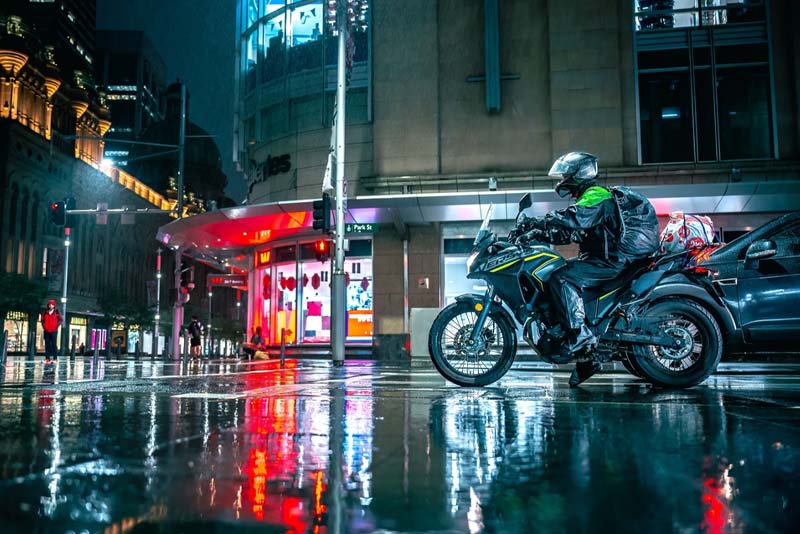
Drivers in California are required by law to change how they drive based on the weather, traffic, and visibility. The “basic speed law” in the state says that a driver should never go faster than what is safe or reasonable for the conditions. This means that a driver can be careless in the rain even if they are technically driving below the speed limit. On slippery roads, drivers should keep a greater distance between them and the car in front of them, use their headlights in the rain, and always be in control. If you don’t do this, like tailgating a motorcycle on a wet freeway, it could be clear proof that you broke your duty of care.
Negligence Is Still a Thing When the Weather Is Bad
Even when it’s pouring, negligence analysis looks at whether the driver acted like a reasonable person would have in the same situation. Rain can’t be blamed for things like speeding, tailgating, sudden braking, or changing lanes in an unsafe way. These are intentional driving habits that the driver can control no matter what the weather is like.
California uses comparative negligence, which means that a court or insurance company can say how much blame each person, the rider, the driver, or even the weather or road conditions should get. But the weather doesn’t usually get rid of all liability. Even if it was raining, a rider who was being careful can still get money for damages. However, if the rider was partly to blame, the amount of money they get will be less.
How Insurance Companies Handle Rain Accidents
Adjusters often call motorcycle crashes caused by rain “unavoidable weather accidents” or point out that the road was slick and visibility was poor to say that no one is really to blame. They might use stereotypes about motorcyclists being reckless, saying the rider “shouldn’t have been out in that weather” or “must have been speeding or lane splitting,” even when there is proof that the other driver made bad decisions.
Insurers also say that the driver “couldn’t see” the motorcycle because of things like rain on the windows, darkness, and glare. But part of the duty of care is to expect that other people are on the road even when visibility is low. Just because a driver can’t see doesn’t mean they don’t have to slow down or be extra careful.
Frequent Reasons for Motorcycle Crashes in the Rain
Some common careless actions that lead to motorcycle accidents in the rain are changing lanes or merging without looking in mirrors or blind spots first. This is especially dangerous when spray and fogged glass make motorcycles harder to see.
When it’s raining, cars need more space and time to stop, so following too closely behind a motorcycle on wet roads can often lead to rear-end crashes.
When drivers don’t give way at intersections or make unsafe left turns in front of an oncoming motorcycle, it gets even more dangerous when they don’t realize how long it takes to clear the turn on slippery pavement.
When water and oil are on the road, grip and braking performance are already bad, and driving while distracted makes reaction time even worse.
Not taking care of your car is a type of negligence. A driver’s ability to stop or see in the rain is greatly reduced by worn tires with low tread, weak brakes, or bad wipers. When tires can’t push water away fast enough, it’s easier for cars and motorcycles to hydroplane and lose control at highway speeds.
Proof That Someone Was Negligent Even Though It Rained
Strong documentation can change the story from “bad luck” to “driver error that could have been avoided.”
Police reports that say someone was driving too fast for the conditions, too close behind someone else, didn’t yield, didn’t have headlights, or got a ticket for breaking California’s basic speed or following-distance laws can help build a case for negligence.
Experts can figure out the speed, reaction, and impact angles of the bike and car by looking at scene photos that show long skid marks, no skid marks (which means no attempt to brake), puddles, debris, lane position, and the final resting positions of the bike and car.
Passengers, nearby drivers, or pedestrians who saw the crash can say for sure that the driver was tailgating, weaving, or going too fast for the rain.
Dashcam, helmet cam, or surveillance video from nearby cameras can show lane changes, unsafe turns, or distractions just before the crash.
Damage patterns on the motorcycle, such as front-end crush, side impact, and rear-end damage, can help figure out the direction and speed of the impact.
Historical weather data and radar or precipitation reports show that rain was present and likely, which means that a sensible driver should have expected slippery conditions and acted accordingly.
What to Do After a Rain-Related Accident If You Are Hurt
Call 911 and ask for police and medical help. If it’s safe, keep your cars where they are until the police take pictures of the scene.
Before moving the cars, take wide-angle and close-up pictures or videos of the scene, including the road surface, puddles, standing water, traffic signals, lighting, and damage to the vehicles.
Keep your damaged helmet, riding gear, boots, and clothes as proof of the forces of impact and the way they slid. Before fixing or getting rid of the motorcycle, talk to a lawyer or an expert if you can.
Even if the pain doesn’t seem bad, get a quick medical checkup. Twisting forces and low-sides are common in wet-road crashes, and they can hurt the spine, head, or soft tissue, which can get worse later.
Don’t give recorded statements or sign anything for insurance companies until you know your rights. Adjusters may use early comments about your speed, visibility, or choice to ride in the rain to argue that you were at fault.
Get in touch with a motorcycle-savvy injury lawyer right away to save video, get information about the weather and the road, and, if necessary, hire accident-reconstruction or human-factors experts.
Possible Compensation Available
Motorcycle accidents that happen in the rain can cause the same kinds of damages as other personal injury claims in California, as long as there is proof and California law allows it. Medical bills, lost wages, reduced earning capacity, property damage, pain and suffering, emotional distress, and long-term effects are all evaluated.
There is no guarantee of a certain outcome or amount in any case. The amount of money you get depends on how bad your injuries are, how strong the evidence is, and how much blame is put on each party.
Common Problems With Motorcycle Claims on Rainy Roads
Motorcycle cases that happen in the rain often have more problems because insurance companies stress the risks of riding and say that choosing to ride in the rain is “assumption of risk.”
They might argue about how much time the driver had to react or say that the motorcycle was too hard to see, but the law still says that drivers should slow down, stay farther away, and use their headlights.
Bias against riders and complicated issues like traction, stopping distance, and reaction time make it especially important to have detailed reconstruction and expert analysis in these cases.
Many riders wrongly think that if rain caused the crash, they can’t get damages, which leads to fewer claims and lower settlements.
Educational content that is specific to the weather helps riders understand that bad weather doesn’t change another driver’s duty of care and that even if they are found to be at fault, they may still be able to recover damages.
California motorcyclists who know these rules can get fair compensation instead of taking the blame for accidents they didn’t cause.
Knowing Your Rights as a Motorcyclist in California
We at Big Ben Lawyers are your motorcycle accident lawyer for rainy road motorcycle accident claims. We know how motorcycles work and how California law applies when the weather is bad. Rain makes crashes more likely, but it doesn’t make them less likely. No matter what the weather is like, drivers still have a duty to drive safely. Injured riders can beat insurance companies’ tricks to lower payouts by learning how liability works in rain-related crashes and gathering evidence early. If you were hurt in a motorcycle crash in the rain, you need to act quickly and keep records. A motorcycle accident claim requires immediate action. The weather may have had something to do with it, but that doesn’t mean you can’t take legal action. California law says that drivers must be careful even when things are hard, and they can be held responsible if they don’t.
Frequently Asked Questions About Motorcycle Accidents That Happen in the Rain
Is it still possible for a driver to be careless if it was raining at the time of the accident?
Sure. When it rains and makes the roads slippery, California law says that drivers must slow down and be more careful. If a driver doesn’t change how they drive when the weather is bad, they could be negligent.
Will the insurance company hold the motorcyclist responsible because the roads were wet?
Insurers often say that the rain, not the driver, “caused” the crash and that the rider chose to take a risk. This is why it’s so important to keep track of dangerous driving and bad road conditions for your claim.
Can I still get money if the crash was caused by both the weather and the driver’s mistake?
Yes. California’s system of comparative negligence lets injured riders get money even if multiple factors contributed to the crash.
What would happen if I lost control while hydroplaning?
Hydroplaning is a physical effect of wet roads, but if another driver was speeding, tailgating, or cutting you off, they may still be responsible.
Is it more difficult to show who is at fault when it rains?
These cases can be more complicated because weather is a factor, but evidence like videos, skid patterns, maintenance records, and weather data can still show negligence.