
Why the Laws Against Distracted Driving Are More Important in 2026
A driver looks at their phone for “just a second” to read a text. At that moment, their car is going over 100 feet at highway speed. They cross lanes, don’t see brake lights, and crash into the back of your car at full speed. You get hurt badly. The driver says they weren’t distracted, but California’s new distracted driving laws from 2026 say otherwise.
Distracted driving is still one of the main causes of accidents in California, and the state is making its laws stricter in response. If a distracted driver hurt you, knowing how California’s “no-touch” phone rules work could be very important to your case. These stricter laws, along with cellphone records, traffic cameras, and witness statements, make car accident claims much stronger for victims who hire experienced California car accident attorneys.
California Vehicle Code sections 23123 and 23123.5 now make it illegal to touch wireless phones while driving in almost all cases. If a driver is caught using a handheld phone while driving, they may be legally presumed to be negligent. This makes it much easier for injury victims to prove fault and get compensation.
In this article: California’s new penalties for distracted driving, how cell phone records can prove fault, how evidence can make claims stronger, and why you should talk to the best California car accident lawyer you can find.
What You Need to Know About Distracted Driving in California
Sections 23123 and 23123.5 of the California Vehicle Code say that distracted driving includes anything that takes your eyes off the road, your hands off the wheel, or your mind off driving. This includes texting, using apps, making phone calls, eating, putting on makeup, or changing the navigation.
The “hands-free” rule in California says you can’t hold a wireless phone while driving. You can’t use your hands or even a single swipe or tap on a mounted device while you’re driving, even at red lights.
Effect on road safety: The National Highway Traffic Safety Administration says that using a phone while driving slows down reactions by 1–2 seconds, makes stopping distance longer, causes lane drift, and makes drivers less aware of traffic signals, pedestrians, and stopped cars.
Trends for 2026: Distracted driving is still on the rise because of app-based gig work (like Uber, Lyft, and delivery drivers), constant social media notifications, misuse of hands-free systems, and traffic jams that make it hard to focus on more than one thing at a time.
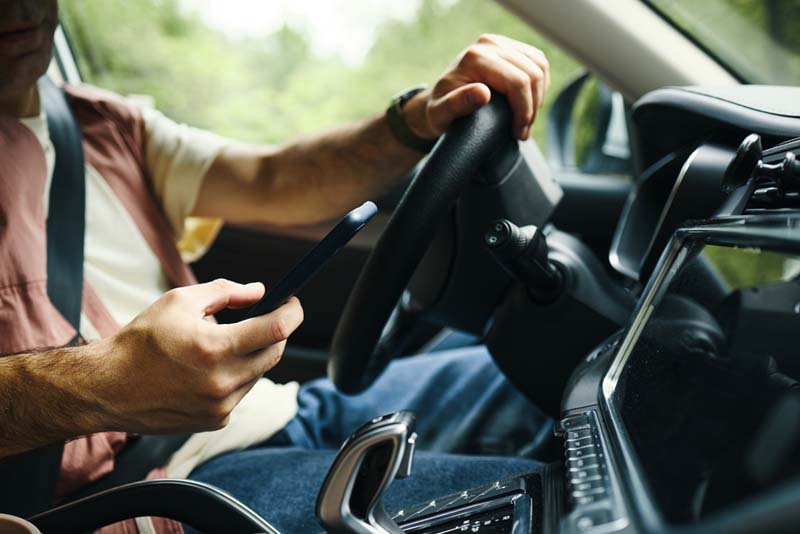
New California Laws About Distracted Driving: Updates for 2026
Using a handheld phone now means you are careless
California’s hands-free law now says that you can’t touch your phone while driving. Negligence per se: If there is proof that a driver was illegally using a phone when they crashed, the law says they had a duty and broke it, and all that is left to prove is causation and damages. This makes victims’ cases much stronger by giving them real proof instead of just guessing.
Higher Fines
Higher fines: The base fines are between $20 and $50, but the actual costs are between $150 and $250 with assessments. Points: Getting caught breaking the law more than once adds points to your license, which raises your insurance rates. Teen restrictions: No one under 18 is allowed to use a wireless device while driving. Commercial standards: Drivers for rideshare and delivery companies have to meet higher standards and may lose their jobs if they don’t.
Enforcement Made Possible by Technology
Police use traffic cameras, dashcams, body cameras, and digital crash-data systems to keep track of phone use and other distractions. Different rules for commercial drivers: Uber, Lyft, DoorDash, and delivery drivers have to take better care of their passengers, and the burden of proof is on them more.
What You Need to Know About Distracted Driving Laws and Your Car Accident Case
Presumed negligence = easier fault determination: Negligence per se changes cases. Statutory violations show duty and breach, so the strategy should focus on causation and damages instead of basic fault. The legal violation gives the victims a reason to think they are responsible.
Proving the defendant’s guilt: Clear violations make comparative-fault defenses much weaker and settlement positions much stronger.
More access to cellphone data: Courts let people see more call detail records, text metadata, data-usage logs, app information, and GPS location data that show what the phone was doing at the time of the accident.
Effect on compensation: If someone is found to have been driving while distracted, it makes it easier to get money for medical bills, lost wages, future care, pain and suffering, and, in very bad cases, punitive damages.
Proof of Distracted Driving: Evidence That Makes Your Case Stronger
Cellphone records: Subpoenaed call detail records (CDRs) show call logs with timestamps, text message metadata, data-usage that shows when apps and the internet were used, app access logs, and cell-tower location data. They don’t show exactly what’s on the screen, but they do show what was going on with the phone during the time of the crash. Attorneys send preservation letters right away and then use subpoenas to force carriers to produce records. Courts only keep records for certain time periods and protect people’s privacy, so you need a lawyer who knows what they’re doing.
Photo and video evidence: Dashcams (from the victim, the defendant, or a third party), traffic cameras, red-light cameras, and security cameras from homes and businesses all show drivers holding phones, looking down, or not braking.
Witness statements: People who were there and passengers say they saw drivers holding phones, looking down, typing, drifting, braking late, or swerving. Witness accounts back up digital evidence and go against what drivers say.
Police reports: Officers write down phones in drivers’ hands or laps, record confessions about texting, calling, or using GPS, and note that distracted driving is a factor.
Expert testimony: Experts in accident reconstruction and technology match the timing of phone use with the speed of the vehicle, the skid marks, and the points of impact. They explain how seconds of inattention make it impossible to brake in time.
How stricter laws help your lawyer make strong cases
Changes the burden of proof: Negligence per se makes defendants only have to argue about causation and damages, which is a much weaker position. Lessens insurance denials: It’s harder to deny fault when there are clear violations. Gives clear causation: Phone timestamps, delayed braking, and the way the impact happened all make strong stories. Gets higher settlements: Strong evidence makes insurance companies more likely to offer fair settlements. Supports claims for pain and suffering: Proven distracted driving, especially in extreme cases like texting while driving at high speeds, makes claims for non-economic damages stronger.
Why You Should Hire a California Car Accident Lawyer
Legal strategy needed: Writing subpoenas, keeping evidence safe, bargaining with carriers, and making negligence per se arguments all require legal knowledge. Insurance companies fight hard: They won’t let you use your phone, ask for proof that isn’t possible, and blame the victims. Lawyers who have been around for a while know how to deal with these kinds of things. Lawyers find hidden evidence by looking at metadata, GPS logs, and timestamps. Knowing your area is important: Knowing how California courts work, how the CHP works, and how traffic cameras work can help you.
Frequently Asked Questions About Car Accident Claims and Distracted Driving Laws
Does using a phone automatically make a driver at fault?
California’s hands-free law (Vehicle Code §§ 23123, 23123.5) says that you can’t use a handheld phone while driving. If that violation leads to a crash, it can be used as proof of negligence or negligence per se. In California, though, you still have to prove fault and damages, and the amount of money you can get may be less if the person who was hurt was also at fault.
Q2: Can my lawyer get the phone records of the other driver?
Yes. Lawyers can get limited phone records from wireless carriers through the legal process. These records show call logs, text metadata, data usage, and app activity. In some cases, court orders let forensic experts look at the device itself, as long as privacy protections are in place and the court reviews the findings.
Q3: What happens if the driver deletes their texts after the crash?
Deleting doesn’t get rid of metadata at the carrier level that shows when texts were sent or calls were made. Forensic examinations can get information from the device level. Also, destroying evidence on purpose can help spoliation arguments that help people who have been hurt.
Q4: Will a police report have proof of distracted driving?
Yes, a lot of the time. Officers may note how a device was used, write down what the driver said about texting or calling, or mention suspected distraction as a factor in a collision report. These notes are important evidence, but they don’t automatically mean that someone is legally responsible.
Q5: How do witness statements help show who was at fault?
Witnesses back up technical evidence by saying they saw the driver holding a phone, looking down, typing, or not paying attention to the road in any other way. Witness accounts of telltale signs of distraction, such as drifting, delayed braking, and swerving, match up with digital records to make a strong case.
Q6: Do teenagers get the same punishments for driving while distracted?
No. According to California Vehicle Code section 23124, drivers under the age of 18 are not allowed to use any wireless communication device while driving. In addition to regular fines, breaking the law can also lead to losing your license, going to traffic school, or both.
Q7: What if both drivers were not paying attention?
California follows the rules of pure comparative negligence. Even if the person who was hurt is partly to blame, they can still get money, but the amount they get is less because they were partly to blame. If you are found to be 20% at fault, you get back 80% of your damages.
Q8: Can I still win a case if the driver says they didn’t use their phone?
Yes. Denial doesn’t change the facts. Phone records, camera footage, witness statements, and expert testimony can all show that someone was using their phone, even if the driver denies it. Courts look at evidence, not statements from people who are at fault.
Q9: Do insurance companies settle claims faster when they can prove that someone was driving while distracted?
Strong evidence of distraction often speeds up settlements. When insurers know that their insureds broke clear safety laws and there is strong evidence, they are more likely to get bad verdicts and are more likely to settle fairly during negotiations.
Q10: When is it time to call a California lawyer for a distracted driving accident?
Right away. It is very important to keep evidence safe. Cell phone records, video from cameras, and witness memories fade quickly. Prompt legal help makes sure that preservation letters are sent, evidence is kept safe, and your claim is protected from the start.
Why People Trust Big Ben Lawyers with Distracted Driving Accident Claims
Big Ben Lawyers has a lot of experience helping people in California who were hurt in car accidents caused by distracted driving.
Experience Showing That Distracted Driving Is Negligent
The lawyers at the firm know how to use California’s negligence per se doctrine, frame violations of the law as strong evidence of liability, and make distraction cases clear to insurers and juries.
Good at Getting Cell Phone Records and Proof
Big Ben Lawyers has set up ways to send preservation letters, write subpoenas, deal with carrier compliance, and do forensic device examinations when they are needed. The company works with tech experts who can get phone data, look at it, and show it in a useful way.
Know About California’s New Laws Against Distracted Driving
The company keeps up with changes to the California Vehicle Code, new case law, and changing ways of enforcing the law. This knowledge lets you build a strong case using the best legal theories that are available.
Known for being tough in negotiations and smart in court
Big Ben Lawyers does a lot of work on cases before they go to trial, and they are also good at negotiating. Insurance companies know that the firm is willing to go to court if settlement offers aren’t good enough, which gives them a lot of power in negotiations.
Client service that is dedicated and caring
The company offers personalized service, clear updates on the case’s status and strategy, help with medical care and bill management, and contingency-fee arrangements that make high-quality representation available without any upfront costs.
Important Disclaimer: Results from the past do not guarantee results in the future. Each case is different and needs to be looked at based on its own facts and circumstances. This does not mean that the results are guaranteed or promised.
Call a distracted driving accident lawyer today for legal help
California’s new laws on distracted driving may make your case much stronger if you were hurt because another driver was texting or talking on the phone. Negligence per se presumptions, access to cell phone records, and modern technology all work together to make it easier to prove fault and get fair compensation.
Big Ben Lawyers can help with:
- Getting and looking at cellphone records and data logs
- Talking to witnesses and getting sworn statements
- Getting footage from traffic cameras, dash cams, and security cameras
- Showing that someone was careless under California’s new hands-free laws
- Being very aggressive when talking to insurance companies
- Going to court and filing lawsuits when necessary
- Putting you in touch with doctors and keeping track of your treatment bills
Call a California lawyer for distracted driving accidents right now.
No charge for the first meeting. Representation with experience. Kind help.
Don’t let insurance companies downplay your claim or say that distracted driving didn’t cause your injuries. Call Big Ben Lawyers to talk about your case and find out how California’s stricter laws against distracted driving can help you get the money you deserve.
To set up your free consultation, call now or go to bigbenlawyers.com